

October is Breast Cancer Awareness Month, a timely reminder to make breast health part of your regular self-care.
Breast cancer is one of the most common cancers affecting women worldwide. In 2024, an estimated 2.4 million women were diagnosed globally, making it the most common cancer among women in 164 countries.1 While awareness cannot prevent every case, recognising an unfamiliar change and seeking medical advice promptly can support early diagnosis.
Breast self-awareness means being familiar with how your breasts and underarm area usually look and feel. It does not replace mammograms, medical screening, or advice from your doctor. Instead, it helps you notice a new, unfamiliar, or persistent change and take the next step without delay.
What is breast self-awareness?
Breast self-awareness can be part of everyday life. You may notice changes while getting dressed, showering, applying body lotion, or looking in the mirror.
The aim is to become familiar with your breasts over time. Their appearance and feel may change during the menstrual cycle, pregnancy, breastfeeding, menopause, and with changes in weight or medication. What matters is noticing something that feels unfamiliar to you.2
A simple way to check
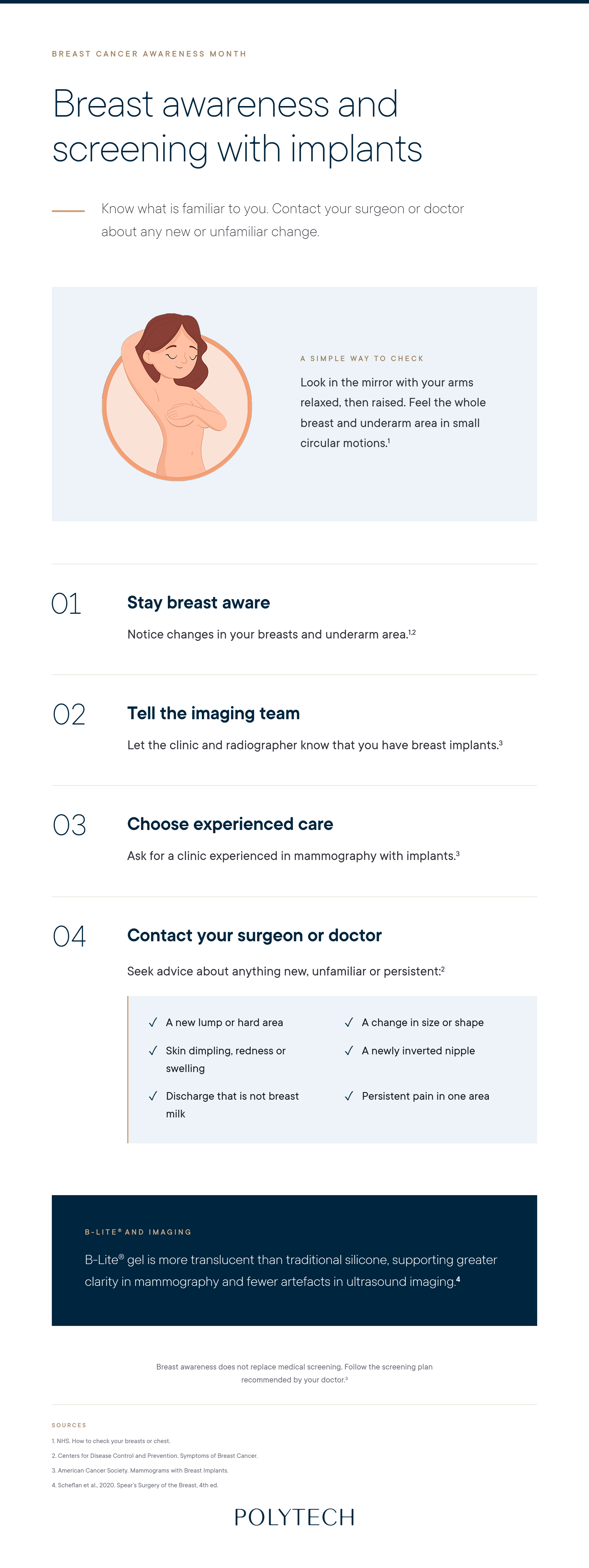
Look in a mirror with your arms relaxed by your sides, then raise them and look again. Notice whether there are new changes in the size, shape, skin, or nipple appearance of either breast.2
Next, feel around each breast and underarm area in small circular motions. Cover the full breast area, from the collarbone to below the breast and from the breastbone to the underarm. You may find it easier to check while standing in the shower or lying down.2
Zu den Veränderungen, die Sie abklärenWhen should you contact your surgeon or doctor?
Contact your surgeon, doctor, or breast-health clinic if you notice anything new, unfamiliar, or not right for you. Do not wait for your next routine screening appointment if you are concerned.
Changes worth discussing include:
- A new lump, hard area, or thickening in the breast or underarm
- A new change in breast size, shape, or appearance
- Dimpling, puckering, redness, swelling, or other skin changes
- A nipple that has newly turned inward or changed in appearance
- Nipple discharge that is not breast milk, especially if it is bloody
- Persistent pain in one area of the breast or nipple
The Centers for Disease Control and Prevention (CDC) advises speaking with a healthcare professional promptly about any breast change that concerns you.3
Breast screening with implants
Having breast implants does not remove the need for breast-cancer screening. Follow the screening plan recommended by your doctor, based on your age, personal history, family history, and local health guidance.
When booking a mammogram, tell the imaging centre that you have breast implants and remind the radiographer on the day of your appointment. Implants can obscure some breast tissue on a standard mammogram, so the team may take additional images called implant-displacement views. This technique moves the implant back toward the chest wall while bringing breast tissue forward, helping the radiologist view as much breast tissue as possible.4
It is important to choose an imaging centre with experience in mammograms for women with breast implants. If you experience lingering discomfort after a mammogram, or notice any new or unfamiliar change, contact your surgeon.
B-Lite® lightweight implants and imaging diagnostics
B-Lite® lightweight breast implants are designed to offer unique advantages in imaging diagnostics compared with traditional silicone implants. The B-Lite® gel contains microspheres and is more translucent than regular silicone gel.
In mammography, this may result in greater clarity and transparency. During ultrasound, B-Lite® implants may produce fewer artefacts and provide better shell definition than traditional silicone implants. B-Lite® implants are also MRI compatible.5
Whatever type of implant you have, always tell your surgeon, doctor, and imaging team before an examination. Your imaging plan should be based on your individual health needs and your doctor’s advice.
Sources
Centers for Disease Control and Prevention — Symptoms of Breast Cancer
Scheflan et al. (2020). Spear’s Surgery of the Breast, 4. Auflage.